
Share buybacks increase the value of an investor’s holding
Financial literacy ・ 12.05.2026
A share buyback is a common practice among listed companies, where a company buys back its own shares from the stock exchange using its own funds. This brings several clear benefits for shareholders, as well as important considerations for the listed company, explains Sander Pikkel, Head of Investment Services at Coop Pank.
Buyback programmes are used by listed companies in situations where the share is trading at low valuation multiples and the repurchased shares are cancelled, meaning the company reduces the total number of shares. For investors, this usually is good news. As a rule, the value of existing shares increases, because earnings per share rise even if the company’s total profit remains the same.
Another reason for buying back shares is to motivate employees who are part of an option programme. Since options are usually granted for achieving long-term goals and can only be exercised by the recipient after three years, they form part of the motivation package.
This is the principle behind the buyback programme recently launched on the Baltic stock exchange by Coop Pank, for example, which has so far used the issue of new shares when granting options. LHV and Infortar, among others, have also decided in favour of buyback programmes.
For existing investors, a share buyback usually means a higher return, as issuing new shares leads to dilution of their holding. For example, as a result of the exercise of options in 2025, the holding of Coop Pank’s existing shareholders decreased by approximately 0.65%.
Buybacks should not be carried out at any price
Warren Buffett, one of the world’s best-known and most successful long-term investors, has said that buyback programmes make sense when a company has no better use for its money and the share is trading below its intrinsic value. According to his philosophy, in such a situation it is better to return money to shareholders. Given the US income tax system, a buyback is a better alternative than paying dividends, for example, because it can be done without paying income tax. It also gives the company flexibility, because while a dividend is seen as a promise, buybacks can be suspended if necessary without causing panic in the market.
A buyback programme also signals to the stock exchange that the management board is confident about the company’s future. For example, the fast food and soft drinks producer PepsiCo has started buying back its shares in response to the growing success of weight loss medicines. Through buybacks, the company’s management wants to ease concerns that changing consumer behaviour will lead to lower future consumption of high-calorie products. This shows that the management is confident about the company’s future.
Last year, General Motors reduced the number of its shares by nearly 10% through a buyback programme followed by the cancellation of shares. As a result, each share now represents a larger part of the company’s assets and profits.
Pharmaceutical companies Novo Nordisk and Novartis are both good examples of how buying back and cancelling shares can keep share-based ratios stable or slightly increasing despite weakening financial results. Profit is divided between fewer shares, which means earnings per share remain stable or even increase slightly.
However, investors should be cautious if a company carries out buybacks at any price. If the company’s market price exceeds its intrinsic value, buybacks are not in the best interests of long-term shareholders, because the capital entrusted to management could be used more efficiently.
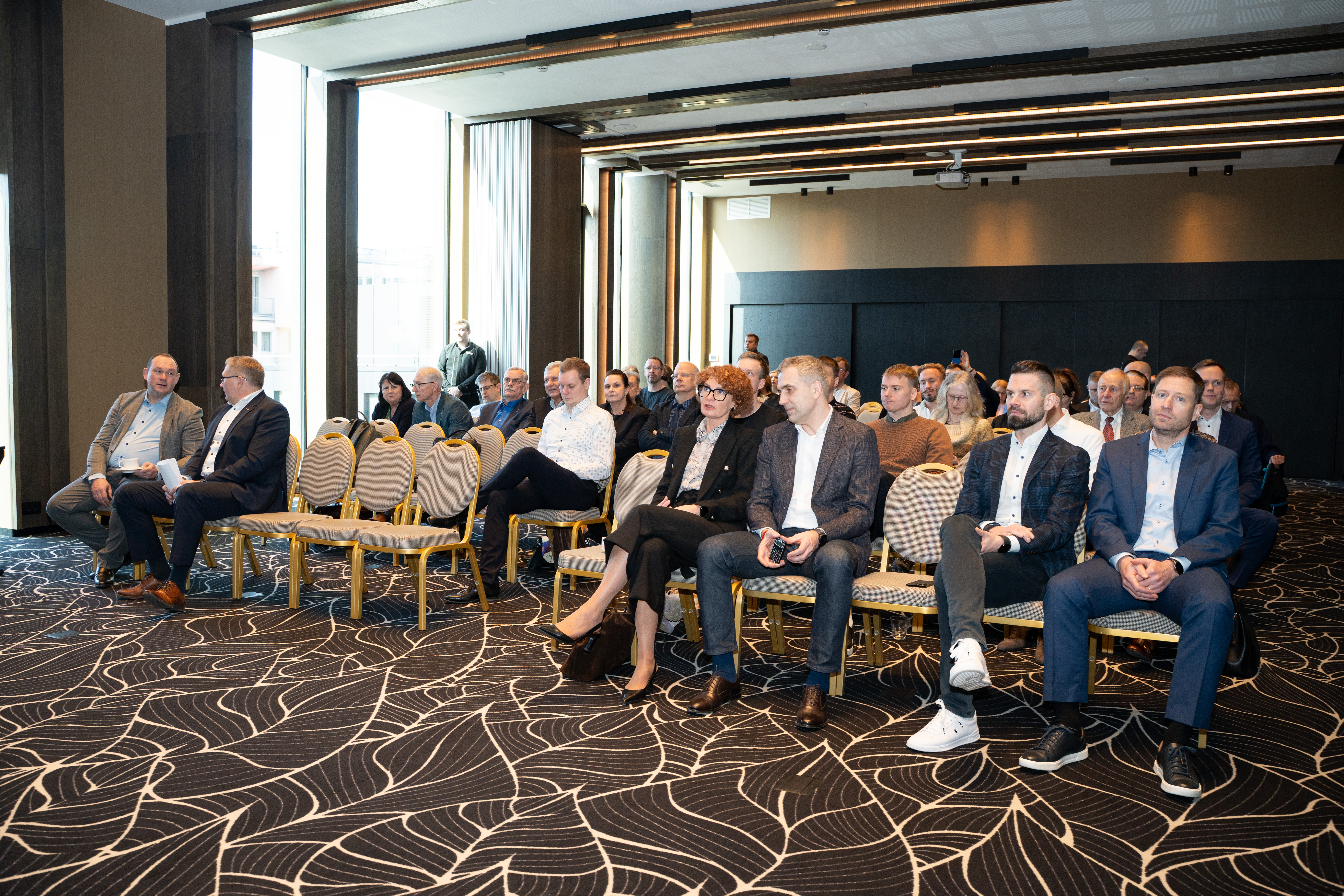
Coop Pank shareholders approved the share buyback programme at the general meeting held in April this year.
Share buybacks are subject to certain limits
From a regulatory point of view, share buybacks are subject to several restrictions, so a listed company cannot buy back shares in unlimited quantities or at any price. No shareholder is obliged to sell their shares either.
For example, the price of the shares purchased may not exceed the closing price of the previous trading day or the average market price of the last thirty trading days by more than fifty percent. However, shareholders have given the company more flexibility regarding the format of the share acquisition. For example, Coop Pank may buy shares on the stock exchange, use block trades or an auction format.
In the Baltics, buybacks are not always carried out on the open market. Artea Bankas, which operates in Lithuania, decided at the end of last year to carry out a shorter programme and has previously also used an auction format to acquire shares. Although an auction has been a faster solution, the price there has usually turned out to be higher than the market price. We can therefore say that, from the shareholders’ perspective, buybacks on the open market are more in their interests, because their money is used in the best possible way.
Liquidity increases
For an investor who wants to sell their shares, a buyback programme means that the share becomes more liquid thanks to a buyer in the market who is prepared to acquire shares up to a quarter of the average daily trading volume.
In terms of volume, a company is not allowed to exceed 25% of the average daily volume of shares traded on the stock exchange. Under European Union regulation, during the first year Coop Pank uses the option of determining the maximum number of shares to be acquired based on the average daily trading volume in March 2026, which was 41,962 shares per day. In addition, there are defined periods during which a listed company may buy back its own shares. For example, the first stage of Coop Pank’s buyback programme ran until the end of May.
For investors and other market participants, transparency is ensured by stock exchange announcements published every Monday on the quantities bought during the previous week.
The opinion article was originally published in Äripäev. The article has been prepared for informational purposes only and should not be regarded as investment advice, investment consulting or an invitation to buy or sell securities.
Investing involves risks, and the value of an investment may both rise and fall over time. Past performance is not a guarantee of future results. In the case of foreign instruments, returns may also be affected by changes in exchange rates.
The information used in the article is based on public sources. Before making an investment decision, we recommend reviewing the relevant documents and, where necessary, consulting a specialist. At present, Coop Pank AS itself does not yet provide investment services.
Latest posts

Financial literacy・05.06.2026
Children’s financial literacy starts with small everyday habits

Financial literacy・27.05.2025
5 gift ideas for graduates starting a new chapter in life